
Introduction
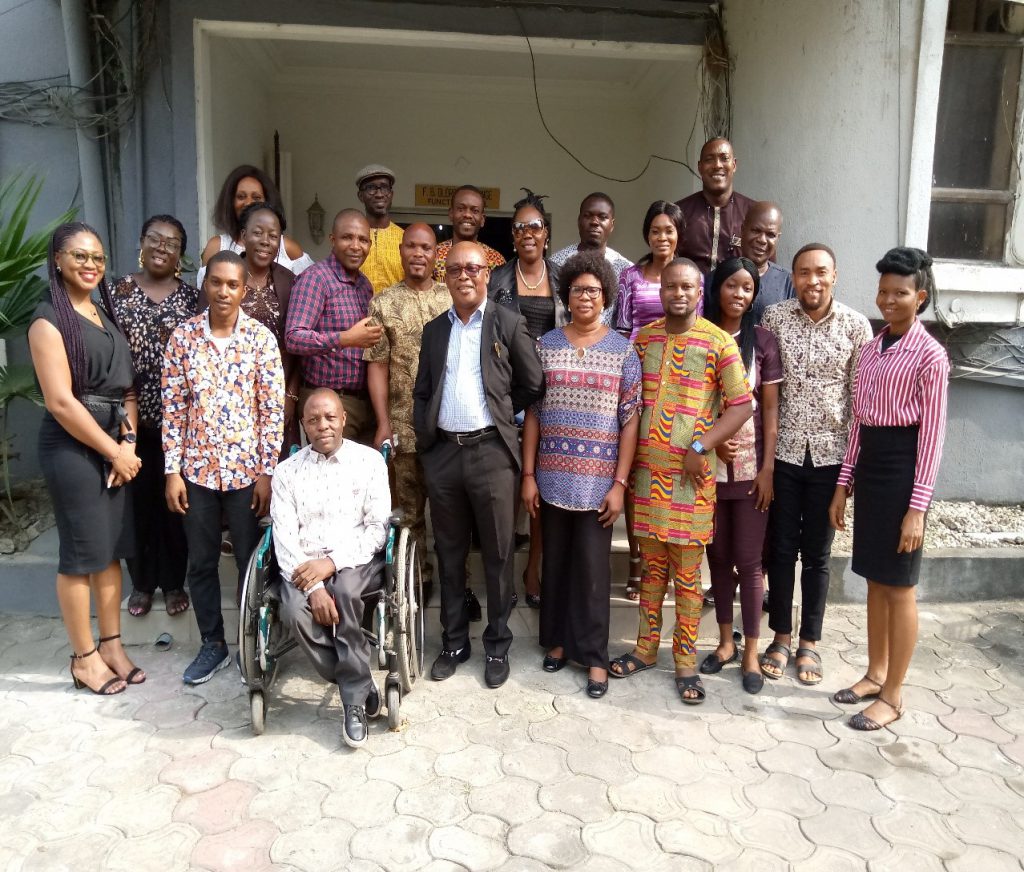
The presentation of the Study on the impact of oil and gas sector management on the quality of life of Nigerians recently carried out by Professors, Adeola Adenikinju and Aderoju Oyefusi was held in Yenagoa, the Capital of Bayelsa State on February 20, 2020. Participants were essentially drawn from Non-Governmental organisations (NGOs) and Civil Society Organisation (CSOs) with oil and gas and environment as their thematic focus. The media, which is a critical stakeholder particularly as it regards sensitisation and dissemination of information also participated in the event.
The objectives of the study were stipulated as follows:
- To examine the quality of the management of oil and gas resources and the effect on quality of life for Nigerians.
- Examine how international developments affecting the global oil industry affect oil exporting countries with a focus on recent developments over the last decade.
- Show how the effect is crucially dependent on the management of the domestic oil and gas industry with a focus on Nigeria.
- Identify fundamental failures in the management of the oil and gas sector in Nigeria and how these combine with shocks in the international oil and gas industry to affect quality of life of citizens.
- Highlight the effect on different socio-economic groups in Nigeria.
- Review the adequacy of the response of the Nigerian government to these issues.
The report examined the linkages between the management of the Oil and Gas sector and quality of life in Nigeria. It sets out the transmission mechanisms by which shocks in the international and domestic environments that affect oil prices translate to lower quality of life for Nigerians. At the primary level of impact are government revenue, the exchange rate and domestic prices. The combination of reduced and fluctuating government spending, higher exchange rate, and rising domestic prices, affects the entire economy and various socioeconomic groups, leading to lower spending, lower quality of life and reduced prospects for growth over the long time. These impacts could be reduced or even eliminated. However, if domestic policies in the Oil and Gas sector are gotten right, if the country has effective fiscal buffers, and if the horizontal and vertical linkages provided by Oil and Gas have been exploited to diversify the economy, there is a likelihood for better living standards for Nigerians.
The aim of the presentation and awareness programme is to make the average Nigerian aware of the linkages discussed in the report such that would spur them to demand for improved accountability and transparency in the sector for the greater good of the country and by extension, the host communities. It is expected that NGOs, CSOs and the media take advantage of the presentation of this study to escalate, sensitise and educate various stakeholders connected with the management of oil and gas proceeds and the general public.
Opening:
The workshop started with an introduction by the participants, followed by brief safety tips and rules of engagement. This was followed by a brief welcome address, highlighting the objective of the study and the purpose of the presentation. Key expectation was for NGOs, CSOs and the media take advantage of the presentation of this study to escalate, sensitise and educate various stakeholders and to take positive actions that would lead to the effective management of oil and gas resources and improvement of living standards of Nigerians.
Presentations:
The first presentation was on the report of: The Nigerian Oil and Gas Sector and its impact on quality of life in Nigeria. During the presentation, the following topics were torched, explaining their interrelationships and the linkage effects between the various topics and the quality of human life in Nigeria.
- Introduction
- Objectives/Terms of reference
- Oil and Gas Sector and the Nigerian Economy: Some Stylized Facts.
- International Developments and Domestic Management of the Oil and Gas Sector with Potential Impacts on Quality of Life
- Analytical Framework: Examining the Transmission Mechanisms
- Effects of Oil Price Fall on the Quality of Life: Examining the data
- Voices of the People
- Review of adequacy of most recent initiatives of the Nigerian Government
- Key Findings & Recommendations and
- Conclusions
Some key issues that emanated from the presentation include:
- The poor performance of Nigeria’s domestic refinery despite the fiscal dependence of the country on the oil and gas sector.
- The high correlation between oil & gas industry and Nigeria’s macroeconomic performance, graphically showing strong correlation between oil and gas sector and macroeconomic performance. It draw its linkage from the 2008 global economic recession, 2015 collapse of global oil price, and Nigeria’s official entry into recession in 2016. It showed the trend in exchange rate, inflation rate, reserves, GDP growth, government revenue and expenditures mimicked the changes in the global market condition.
- The effect of international demand and supply on oil prices and the link with domestic oil and gas management policies, macroeconomic variable, socio-economic factors and the quality of life.
- The effect of reduced forex earnings, increase in exchange rate and increase in prices of capital and consumer goods on reduced and fluctuating revenues to government, high production costs on businesses, firms and traders and low real income on consumers and households, leading to generally lower aggregate demands, output, low growth and the quality of life.
- The effect of the collapse in crude oil prices on government revenue, exchange rate, inflation rate, unemployment rate and GDP rate exposed the vulnerability of the Nigerian economy and people to shocks in the international environment that affect the oil and gas industry.
- Compering the difference in factors and effect of the Oil price fall 2008 and that of 2014-2016. It showed in 2008, there was a robust fiscal buffer prior to the price collapse: ECA balance (November 2008) was about $20 billion (a third of external reserves) and there was stability and increases in oil production following relative peace in the Niger Delta resulting from the amnesty programme. However, in 2014-2016, the following factor made the real difference in the effect on quality of life;
- Withdrawals from ECA not replaced during more than half a decade of oil boom; rather further depleted: by December 2015, balance in the Account was only about $2.1 billion.
- Delay in passage of PIB, political uncertainties hampered new investments in oil and gas sector.
- Fuel subsidy payments soared putting pressure on government’s fiscal activities: $8.4 billion allegedly spent on fuel subsidies in 2011 (5.5 times what was budgeted and slightly over 4% of GDP).
- Protest oil theft, resumed hostility in the Niger Delta region leading to lower oil production and large-scale theft of crude oil: euphoria over amnesty programme had evaporated, stark reality of underdevelopment in the Niger Delta; damning revelation of ownership of oil wells; public revelation of oil subsidy scam; reality of illegal mining in other regions.
- Key developments in the International Oil and Gas Industry that have direct bearing on the macro and socio-economic variables include; climate change and global push towards carbon reduction, drive towards energy security, global economic meltdown, trade wars, increased protectionism and technological disruptions and innovations. These are compounded by domestic policy failures in Nigeria’s oil & gas sector including;
- The absence of significant fiscal buffer for the country to serve as economic cyclical buffer like we had during the global economic meltdown in 2008,
- The dominant legislation in the sector is the Petroleum Act of 1969 and its various amendments lag behind global trend.
- Fuel subsidy costs the economy over 3.4% of GDP and is as high as 50% of budget. Non-performing refineries made Nigeria Africa highest oil importer
- Gas flaring constitute a huge costs to the economy, depriving the economy of jobs, lost electricity, environmental challenges.
- Pollution; gas flaring releasing tons of carbons, oil spillage, etc. health and economic costs so huge
- Conflicts in the Niger Delta; militias, pirates, robbery, kidnapping and diverse criminalities resulting from long years of neglect and environmental degradation. Lives have been lost.
- Three key issues associated with the existing arrangements that have negatively affected Nigeria’s Oil and Gas sector and its effect on the quality of life of Nigerians include;
- The lack of recognition of any form of property right and fiscal jurisdiction of States and communities in the Niger Delta over Oil and Gas resources, leading to the agitations of resource control.
- The co-existence of a largely unregulated and unexploited non-fuel mineral sector and an “excessively exploited or controlled” Oil and Gas sector, despite the fact that the Nigerian Constitution grants the Federal government sole property right and fiscal jurisdiction over both resources.
- The impact of existing oil revenue sharing arrangement (the 13% derivation funds) on development of the Niger Delta region.
- Transmission Mechanisms and how oil price fluctuations, especially a fall affect the government, household and businesses was outstanding.
- Fall in oil prices translates to fall In Government revenue, workers’ salaries & contractual obligations. The direct effects include; delayed salaries, non-payment of salaries, non-payment of contractors and inability to pay living wages. As at 2015, up to 27 states of the 36 owed backlog of salaries to their workers, Contractors were also been owed, while the federal government was able to mortify the impact of the fall in oil prices on federal government workers through increased debts. Despite huge borrowing by State and the bail-out funds support from the Federal government, many states still owed their workers for a very long time.
- Oil price fall directly affect Household/ Consumer welfare through high prices of goods and services including food prices, high and uncertain real income, higher unemployment, and lower real consumption. The rise in consumer price index leads to fall in household expenditures as higher prices reduced the purchasing power of Nigerians. There is very high negative correlation between oil price and unemployment. Fall in oil prices are associated very strongly with increase in unemployment rates.
- Oil Price Fall without significant shock absorbers affects business operations negatively as it leads to increase in exchange rate and limited access to forex, higher production costs, lower sales and business short down.
Following from the combination of the above developments, aggregate demand decline from contraction in income, this and other factors lead to increase in unemployment, poverty also increases and a lot of people got swept off the middle income class. Nigeria’s Fragility Index increased from 95.7 to 99.9 over the period 2008 to 2018 moving the country from 18th position in fragility in 2008 to 14th position in 2018. Four factors significantly contributed to the increase in fragility. They include greater fractionalization among the country’s elites, economic decline, deterioration in public services, and increased demographic pressures.
- Key findings of the study were enumerated as follows;
- Macroeconomic variables are closely linked and correlated with movements in oil prices.
- Nigerian citizens are not insulated from the effects of crude oil price volatility.
- Upward trends in oil prices benefits and poses challenges to Nigeria.
- Absence of an effective stabilization mechanism leads to an Existing Potential for Macroeconomic spiral trap.
- Lack of key legislation and reforms in the management of oil and gas results in poorer transparency, accountability.
- Challenge of property rights, fiscal jurisdiction and weak revenue sharing formula may have contributed to the under development & environmental degradation Niger delta.
- Inability to effectively generate key investments in the gas sector through legislation and policy incentives results in missed opportunities to generate crucial revenue and jobs.
- In concluding the presentation, the following critical points were raised;
- Oil price fall affects the economy negatively; all sectors of the domestic economy and all groups in society are affected: farmers, students, civil servants, government contractors, households, traders, big businesses, small and medium scale enterprises, and persons in the middle class of society, even politicians.
- This effect is pronounced because of the poor management of the oil and gas sector
- Nigeria must now develop effective plans to reshape her economy and exploit the linkages between the Oil and Gas sector and other sectors of the economy to achieve agricultural and industrial transformations.
- With its huge oil and gas reserves, abundant solid minerals, vast arable land and a large and youthful population, Nigeria certainly has the potentials to do better in terms of development than it is presently doing and to give her citizens a higher quality of life. But policies and methods of doing things will have to change
- Need to revisit some policy failures in the Oil and Gas sector that have proven to contribute to the country’s woes and the impoverishment of its people.
- This Study provides some direction. However, the exact position to be taken in respect of each of the factors identified will require deliberations by all stakeholders, including the citizens who are the actual owners of the nation’s oil and gas wealth.
- Immediately following this presentation was the infographic version of it, bringing out critical salient points in simple to understand diagrammatic representations. This presentation simplified the various notes and graphs into easy to remember and relate with pictures.
Discussions, Reactions and suggestions after presentations:
- PIB or PIGB is not in the interest of the people of the Niger Delta. It was suggested that a simple, single document stating the percentage to be given to the producing communities should be produced by law.
- The 13% derivation should be given directly to the producing communities rather than passing it through the state. There was also an argument that because of the level of neglect in the region and the level of degradation of the communities, there is need for an upward review of the 13% derivative fund.
- That there is need for the petroleum industry bill and the solid mineral (mining) operations policies to be harmonised to create level playing field for operators in both sectors.
- That Oil subsidies should be discontinued as it appears to be a scam by the elites to undermine the generality of Nigerians. Rather, artisanal refiners should be encourage to produce legally in more conducive and controlled environment and not criminalised.
- Nigeria has all the requisite resource, human and materials, to produce and process crude and supply enough volumes to its people, hence, has no business importing petroleum products. If the existing refineries are so moribund and cannot be renovated, new refineries should be built to solve the problem of petroleum product supplies. So the scam call subsidy will be scrapped.
- Subsidies affect all other commodities hence should be continued.
- We cannot totally continue to blame government for all the failures we have experienced, Nigerians themselves have a huge role to play in the issues of sabotage. Nigerians have continued to form themselves into various illegal committee to make subversive demands on other Nigerians. There is a fundamental problem of greed and selfishness on the part of government and individuals in governance, hence they are unable to take critical actions on issues that seriously affect the generality of the public. Example was given in the situation of oil spillage in the Gulf of Mexico and that of the Bonga Oil spill in Nigeria and how the various governments reacted to the issues. While that of the Gulf of Mexico was immediately tackled and cleaned up that of Nigeria is still lingering till date.
- There are historical antecedents to prove that there are owners of the land from which Oil is being extracted, hence the payment of royalties to various traditional institutions in the key producing communities. Advocacies should be taken from the point of changing the legal regime (the Land use act) which removes the right of ownership of the land from its owners to the Federal government. However, recognition is only given due to the fact that there is a historical perspective and recognised of the communities as owners of the land.
- The effect of the segregations of the various groups as – host, transit and impacted communities- create various degrees of conflict in the region. The IOCs also take advantage of these conflict in surcharging the various communities. The presence of these conflicts impact negatively on development and consequently the quality of life in the country. There is therefore need to review these nomenclatures and come up with a unified name for all impacted communities.
- There was an opinion that the country has not done so very well because of the very weak governance structures and the lack of political will of government to implement the various laws that can translate the Nation into a transparent and accountable country.
- Despite the perceived and apparent injustice meted upon the Niger Delta region, the federal government has also supported the development of the region with the creation and funding of various interventionist agencies set up to cushion the effect of the negative impact of exploration activities in the region and to generally improve the livelihood of the citizens. A chronicle of all persons from both Bayelsa and Rivers State who have been in leadership of key institutions as the petroleum ministry and the NDDC were listed. There was an opinion that while these persons had the opportunity of the region, they rather have used the opportunity to enrich themselves.
Key suggestions/conclusion:
- There is need for us to effectively focus our advocacy the other parts of the country rather than focusing only on the needs of the Niger Delta. The reason is that whatever affects the oil industry affects the entire nation, hence the discussion should be on improving the existing laws and getting them functional. There must be a high level of collaboration and synergy between law makers from every region of the country to have better livelihood for the entire nation.
- Sensitisation should start with our own people; that is, the state governments and the Houses of Assembly. Members representing our people at the federal chambers (Senate and House of Representatives) need to engage in critical lobbying amongst their peers at the federal level and also take the advocacy outside the shores of this country to attract the international communities and the IOCs.
- There is need for strategic stakeholder in a dialogue of this nature let by Bayelsa Non-Governmental Organisations’ Forum (BANGOF) and other coalitions of Civil Society Organisations to take the dialogue to a higher level of discussion.
- While we advocate for an increase in the 13% derivation, there is need for us to also look inwards to be transparent and accountable to the citizens. There is need for Government to be open with the figures of the funds coming into the state.
- The need for the creation of a specialised agency Bayelsa State Oil Producing Areas Development Commission (BASOPADEC) to cater for the needs of the producing communities. A bill for its establishment has already passed 2nd reading in the floor of the State House of Assembly. Engagements must be sustained to see it passed into law and operational.
- There is urgent need to diversify the economy and look beyond the advocacies of more Oil revenue and the 13% derivation and refocusing upon other sectors of the economy like glass industries from abundant sand deposits in the state, agricultural produce (rice, palm oil, cocoa nut oil etc.) in other to create employment and improve the livelihood of the people.
- Educate and sensitise communities using various channels to create community driven demands for their issues and needs to government.
- Engage the media, particularly the conventional media to generate the discussion to help the public understand these issues better.
- Build the capacity of key stakeholder particularly those representing the public in their capacity as Assembly Members and Councillors to be able to understand these issues and be able to effectively represent their people.

Bayelsa participants , and facilitator (SISDEV E.D.) Photographs.
